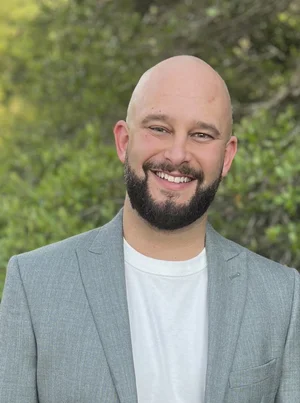
By Josh Davis, LHMC - Complex Trauma & Relationship Therapist For Gay & Queer Men
No one can ever predict how a loss will impact you.
Whether it was a situationship that never got a title but still felt like your everything. It might be someone you loved for years.
But now they're gone. And you're left with grief that you were not prepared for.
Straight couples get a script. Ours often don't.
When a straight couple breaks up, there's a whole cultural playbook for them to go by. Friends know what to say. Family checks in. There's a shared, almost universal understanding of what the loss means and how long it's "supposed" to hurt.
For a lot of gay and queer men, that script doesn't exist, or it exists but doesn't quite fit.
That's when people's judgments and biases can surface. Maybe your family never fully saw the relationship as real, so they don't think to ask how you're doing. Maybe your friends knew you were dating but didn't understand what the two of you actually built together. You might not have felt comfortable being with them in public, and now it feels like a secret on top of a secret. You're grieving someone you were never able to be fully open about in the first place, which means part of what you lost was never even seen by the people around you.
This is what's sometimes called disenfranchised grief, loss that isn't openly acknowledged or supported by the people around you. And it's incredibly common in gay and queer breakups, even ones that looked, from the outside, like "just a relationship that ended."
It's not only the person you're grieving.
Here's what I hear a lot in session: "I don't understand why I'm this wrecked over someone I only dated for a few months."
Almost always, it's not really about the length of the relationship. It's about what the relationship represented and the depth of the connection you had.
For a lot of gay and queer men, a relationship can be the first place you ever felt fully chosen. Fully seen. Not too much, not too gay, not too sensitive, not too anything. If you grew up believing love was conditional on being straight-passing, masculine, quiet enough, good enough, etc., then finding someone who loved you without those conditions can feel like coming home for the first time.
So when that relationship ends, you're not just losing a partner. You're losing:
The proof that you're lovable exactly as you are
The safety you finally found after years of hiding or performing
A future you'd started to actually let yourself imagine
A version of yourself who felt free enough to be fully out, fully open, fully known
That's not an overreaction. It's real. That's grief doing exactly what grief does: showing you how much something mattered.
Old wounds have a way of showing up in the breakup.
If the breakup has stirred up something that feels bigger than the relationship itself — old shame and self-doubt, a fear that you're fundamentally unlovable, a familiar ache of being left or not being enough — that's not random.
For many gay and queer men, especially those who grew up in religious households or communities that treated their identity as something to fix, hide, or apologize for, breakups can reopen much older wounds. The relationship ending can start to feel like confirmation of everything you were once taught to believe about yourself.
This is where the grief stops being just about the ex and starts being about the relationship you have with yourself.
So what actually helps?
Not rushing it. Not "moving on" and pushing a timeline someone else decided was reasonable. Not white-knuckling your way back to "fine."
In our work together, we don't just process what happened in the relationship. Using the NeuroAffective Relational Model (NARM), we look at what's happening underneath it. How you are relating to yourself and the situation. What's activated in your body, what old patterns are getting triggered, and what this loss is asking you to understand about how you learned to love and be loved.
That might look like:
Making sense of the relationship without getting stuck replaying it on a loop
Untangling your sense of self from the relationship, so you can start to feel like you again
Understanding why this loss feels bigger than "just a breakup"
Working through the shame or self-blame that's showing up
Rebuilding a sense of security that lives in you, not just in whoever you're dating
You don't have to have it all figured out to start. And you don't have to carry it alone.
If this is where you're at right now, I'd be glad to talk. I offer therapy for breakups and grief for gay and queer men in Fort Lauderdale and virtually across Florida. Schedule a free consultation call and we'll see if we're a good fit.
If you’re in the middle of this, you can read more about therapy for breakups and grief. We can make room for what you’ve lost and what you need now, without rushing you to be okay.