From Shame to Secure Self: Healing Religious Trauma and Faith Deconstruction for Gay and Queer Men
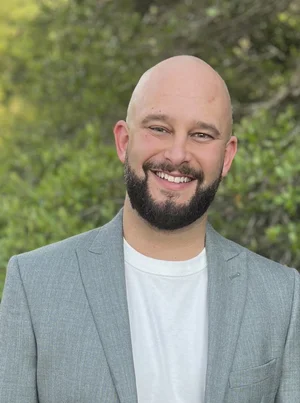
By Josh Davis, LHMC - Complex Trauma & Relationship Therapist
For many gay and queer men who grew up religious, coming out feels like the hardest part. And believe me, it is hard.
But something happens even after coming out. After building a career, finding a partner, moving to an accepting city, and creating a life that looks whole from the outside, there's still a lingering pain. A sadness you can't quite place.
A voice that says: You are too much. Not enough. Broken. Unlovable. Disgusting.
If that sounds familiar, I want you to know something: that voice didn't come from you. It was handed to you. Taught to you. Often in the name of love.
And it has a name.
What Is Religious Trauma?
Religious trauma isn't just having had a negative experience with people inside the church, though it absolutely includes that. It's what happens when spiritual teachings, religious communities, or faith systems become a source of fear, shame, and deep disconnection from yourself, rather than connecting you to something greater.
And these messages don't stay inside church walls. They seep into our broader culture. Just look at purity culture, or the ongoing cultural wars over sexuality and the body. This is bigger than any one congregation.
For gay and queer men, it often sounds like:
Being taught that your sexuality is sinful, not just what you do, but who you are and what you think
Learning that belonging required hiding, conforming, and appeasing
Feeling like you had to choose between God and yourself, between community and your own wellbeing
Living with the fear of judgment, punishment, or abandonment woven into everyday life
Being rejected by a faith community, by family, or by both
Most of the time, this happened during childhood and adolescence, exactly when your brain and nervous system were learning one of the most fundamental questions any of us ever has to answer:
Who am I? Can I be myself and still be loved?
When the answer is "no," you adapt. You do what you have to do to stay connected to your community. On a deeper, subconscious level, you survive. (The worst fear a child has is to be alone in the world, so they'll choose painful connection over the terror of independence.) And those adaptations don't just disappear when you leave the church, come out, or build a different life.
They follow you. I know, because I've lived it.
My Story
I grew up in a conservative Christian family where faith was the center of everything. Church, Bible studies, vacation Bible school, youth group, all of it. I was taught that nothing mattered more than having a personal relationship with Jesus, that he was the guide to life and always with you. The goal was to live like Christ: pure, righteous, and holy.
What started as an encouraging message became my personal hell.
I knew I was different. Growing up with three older sisters, I noticed that my admiration for the older boys who took me under their wing felt like something more, something that confused and frightened me. It appeared different from the experiences of the boys around me. I remember sitting in church as homosexuality was listed alongside bestiality and theft, described as unrighteous and an abomination. The fear of even being curious or talking to someone about those feelings felt like a threat, taboo.
So I shoved it down. I learned to hide, to deny what felt like my "sinful nature." That path led me to getting my undergraduate degree in Christian Ministry, trying to be as holy and Christlike as possible. It also led me to profound self-hatred, depression, and a long, painful questioning of God's goodness.
Eventually, I left that life behind. I had no choice, the shame and self-rejection had become unbearable.
Now, more than a decade later, with a new life and a lot of therapy, I still carry grief. I grieve for the community I grew up in. I reconcile my faith, my youth, and my values. I think about the tears I cried at night, praying God would make me "normal." I hold the memory of well-meaning, loving people telling me I was demon-possessed, just needed more faith, and it was my cross to bare.
The funny thing about grief is that it doesn't go away entirely. But it changes and shifts. And so do you.
The Hiding Comes at a Great Cost: Yourself
In my work with gay men, I use an approach called NARM (NeuroAffective Relational Model). One of the things I love most about it is the question it starts with.
Not: What's wrong with you?
But: What do you want for yourself? And: How did you learn to survive?
From a NARM perspective, many of the struggles that bring gay and queer men into therapy aren't signs of something broken, flawed, or unholy. They're creative survival strategies, ones that once made a lot of sense.
As gay and queer kids growing up in rejecting religious environments, many of us learned:
If I'm perfect, maybe I'll be loved.
If I make everyone happy, I won't be abandoned.
If I'm helpful enough, I'll have value and worth.
If I hide this part of myself, I'll stay safe.
These strategies helped you survive. They were actually brilliant, given what you were working with.
But eventually, they become exhausting.
Many of the gay men I work with tell me things like:
"I don't even know what I actually want." "I feel like I live to serve others." "I always feel like I'm performing." "I can't relax, even when everything is fine." "I still feel guilty for being gay, and I don't even believe that anymore."
These aren't character flaws. They're old survival strategies still running in the background, long after they served their purpose.
What Is Deconstruction And Why Is It Harder Than It Looks?
Faith deconstruction gets misunderstood.
It's not just leaving religion. It's not becoming an atheist. It's not rejecting everything you ever believed.
Deconstruction is the process of examining the beliefs, messages, and identities you inherited, often before you were old enough to choose them and asking honest questions:
Do I actually believe this? Does this belief serve my wellbeing? Does this align with how I see the world? Was this chosen by me, or was it handed to me? Who would I be without this shame?
For some people, that process leads away from organized religion entirely. For others, it opens the door to a more expansive, affirming, or deeper sense of spirituality. Many people land somewhere in between, uncertain, still sorting it out, and that's okay too.
There's no right destination. The work is becoming free enough to be curious and than actually choose for yourself.
What people often don't expect is how destabilizing that process can feel, even when it's clearly the right thing. But for most people, there's eventually a deep exhale, a sense of peace and freedom that comes from setting down the weight of living as a constant sinner, under perpetual judgment and pressure.
Here's why it's hard: your beliefs aren't just ideas. They're relational. Neurological. Communities and entire cultures are built around belief systems. They became interwoven with your earliest experiences of love, safety, belonging, and meaning. Your brain is literally organized around them. So when those beliefs start to shift or fall apart, it doesn't just feel like changing your mind. It can feel like losing your foundation.
Deconstruction Is Grief
This is the part that catches a lot of people off guard.
You might be grieving:
The community you lost
The time and experiences you can't get back
The certainty you once had
The version of yourself who tried so hard to fit in
The years you spent believing you were broken
Relationships that changed or ended when you started becoming more yourself
There's often anger in there too. Sometimes a lot of it. And that anger is not bad.
Anger that you weren't protected. Anger that shame was handed to you in the name of love. Anger that you learned to fear parts of yourself that were never wrong.
All of it makes sense. And healing often requires making room for it not bypassing it.
From Fighting Yourself to Self-Compassion
One of the most important things I want to offer here is this: the parts of you that learned to survive aren't the enemy. They can feel like it, but there is wisdom in those strategies.
The perfectionist. The people-pleaser. The achiever. The one who still worries, somewhere in the back of their mind, that they might disappoint others, or God, or that some greater force is watching and punishing them.
In NARM, we don't try to get rid of those parts. We get curious about them. We recognize that they developed for real reasons, in response to real experiences.
Healing happens when we can gently begin to separate:
Who I am from What I had to become to survive.
That's nuanced work. It takes time. It's also some of the most meaningful work I get to do.
Here's something worth naming: at first, being self-compassionate can actually feel sinful, selfish, and even threatening. For people who were taught that selflessness was holy and self-focus was pride, turning toward yourself with kindness can trigger its own wave of shame.
Over time, though, what tends to open up is a deeper connection to yourself, more emotional freedom, a stronger and more grounded sense of identity, more authentic relationships, and a quieter inner world less dominated by shame and self-criticism.
The relationship with yourself starts to change.
Shame Lives in the Body, Which Is Why You Can't Think Your Way Out of It
Here's something I find important to name: shame doesn't just live in your beliefs or thoughts. It becomes embodied in your nervous system.
It shapes the lens through which you see yourself and the world. It lives in how you hold yourself. How you speak about yourself. How much joy you allow yourself to feel or how quickly you brace for it to be taken away. It shapes who you think you deserve to be close to, and how much love you actually let in.
You can intellectually deconstruct every doctrine. You can know, rationally, that there is nothing wrong with being gay. And still carry, somewhere below all of that thinking, the felt sense that something about you is fundamentally wrong or that you're being punished by some greater force.
That's why healing religious trauma requires more than insight alone. It requires relational experience being witnessed, being met with genuine warmth, slowly building new moments that begin to tell a different story to your nervous system.
That's not something that happens in isolation. It's something that happens in relationship.
You Get to Decide What Comes Next
Healing religious trauma isn't about deciding whether faith is good or bad. It's about reclaiming your right to belong to yourself to create your own value system and reevaluate what you actually believe about the world.
You get to ask the hard questions. You get to be angry. You get to grieve. You get to redefine what spirituality means or doesn't mean for you. You get to build a life that actually reflects who you are.
And perhaps most importantly: you get to discover that there was never anything inherently wrong with you.
The shame was learned. The fear was learned. The hiding was learned.
And because they were learned, they can be unlearned.
A Final Word
If you're a gay or queer man in the middle of deconstructing your faith — or carrying something you're only beginning to recognize as religious trauma — I want you to know:
You're allowed to question. You're not bad. You're not failing. You're not losing yourself.
In many ways, you may finally be truly connecting with yourself for the very first time.
And that can be both terrifying and incredibly beautiful.
I specialize in working with gay men and their relationships, using a trauma-informed, relational approach called NARM (NeuroAffective Relational Model). If you're struggling with religious trauma, shame, perfectionism, or questions about identity and belonging — you don't have to figure it out alone.